Understanding Manlift Fundamentals
What is a Manlift?
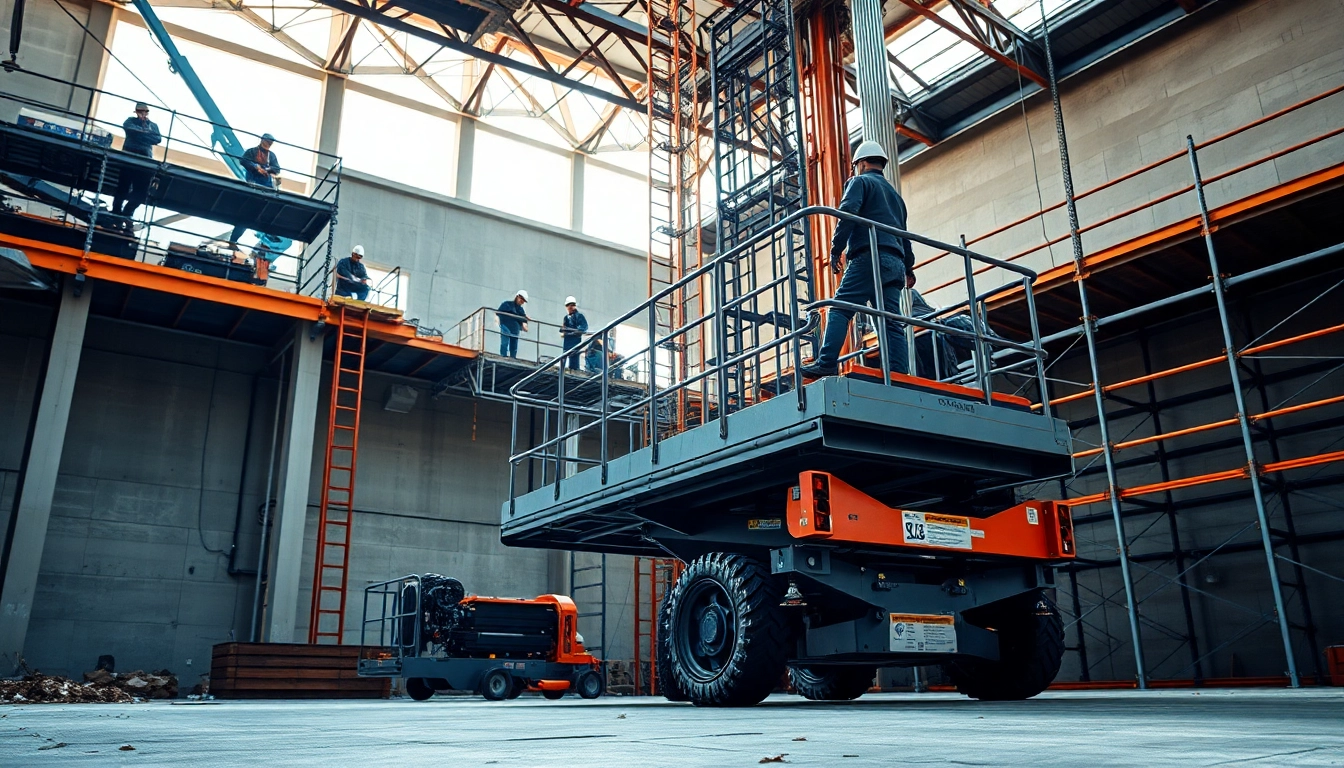
A manlift is an elevated work platform commonly utilized in construction, maintenance, and industrial applications. This equipment provides the ability to safely lift personnel and their tools to reach heights that are otherwise difficult to access. Structurally, manlifts consist of a platform or bucket hoisted by a mechanical system, enabling workers to perform a variety of tasks at elevations efficiently and safely. These lifts are designed to facilitate work that involves significant reach and demands safety when operating at heights.
Types of Manlifts Available
Manlifts come in various types, each tailored for specific use cases:
- Articulating Boom Lifts: These lifts feature flexible joints that allow them to reach up and over obstacles. They are ideal for navigating complex workspaces and high-rise buildings.
- Telescopic Boom Lifts: Characterized by a straight arm, these manlifts can extend to great heights, making them suitable for tasks that require direct elevation without the need for maneuverability around obstacles.
- Scissor Lifts: These lifts have a platform that rises vertically and is ideal for tasks such as indoor maintenance where a stable base is essential. Their compact design allows for efficient operation in tight spaces.
- Push-Around Lifts: Lightweight and easy to maneuver, these lifts are designed for indoor use and typically have lower height capabilities. They are perfect for tasks that require quick access to different working heights.
Features and Benefits of Manlifts
Manlifts offer a myriad of features and benefits that enhance productivity and safety:
- Enhanced Safety: Equipped with guardrails, non-slip platforms, and emergency shut-off controls, manlifts are designed to prioritize worker safety while on elevated work surfaces.
- Increased Efficiency: By allowing multiple workers to reach heights simultaneously along with their tools, manlifts significantly reduce project time.
- Versatility: Different configurations allow manlifts to adapt to a wide range of jobs, whether in construction, facility maintenance, or event staging.
- Accessibility: Manlifts enable access to hard-to-reach areas, simplifying tasks that were once time-intensive and laborious.
Manlift Safety Guidelines
OSHA Safety Requirements
Operating a manlift requires strict adherence to Occupational Safety and Health Administration (OSHA) guidelines. Workers must be trained and familiar with specific standards, which include:
- Using fall protection systems when working at height.
- Ensuring all operators have received proper training to operate the equipment safely.
- Routine inspection and maintenance of the manlift to ensure it meets safety standards.
Pre-Use Inspection Protocols
Before the operation of a manlift, it is crucial to conduct thorough inspections to ensure safety:
- Visual Inspection: Check for any visible damage, hydraulic leaks, and proper functioning of controls.
- Functional Tests: Ensure all mechanisms function correctly, including lifts, lowering, steering, and emergency functions.
- Environmental Checks: Consider the surrounding environment for hazards such as overhead power lines, uneven terrain, and weather conditions.
Best Practices for Safe Operation
To operate a manlift safely, follow these best practices:
- Always wear appropriate personal protective equipment (PPE), including helmets, harnesses, and non-slip footwear.
- Ensure that the lift platform is clear of unnecessary tools and debris before use.
- Never exceed the weight capacity specified by the manufacturer.
- Maintain constant communication with ground personnel whenever operating at height.
Choosing the Right Manlift for Your Needs
Assessing Project Requirements
Choosing the right manlift involves a thorough assessment of project requirements:
- Height Requirements: Determine the maximum height needed for the job.
- Site Conditions: Evaluate the job site for spatial limitations, terrain type, and obstacles.
- Load Capacity: Assess how much weight the manlift will need to safely lift, including the workers and their tools.
Renting vs. Buying a Manlift
Deciding whether to rent or buy a manlift is a significant consideration:
- Renting: Ideal for short-term projects, renting offers flexibility without the long-term costs of maintenance.
- Buying: Suited for businesses with consistent, long-term needs; ownership can be a cost-effective solution over time.
Factors Impacting Manlift Selection
Several factors should influence your decision when selecting a manlift:
- Type of Work: Different tasks may require different types of lifts, such as a scissor lift for indoor works or a boom lift for outdoor tasks.
- Operating Environment: Indoor vs. outdoor settings can dictate the type of lift and safety features necessary.
- Access Points: Consider how the manlift will access the work area and whether additional maneuverability is required.
Applications of Manlifts across Industries
Construction and Maintenance Tasks
In the construction industry, manlifts are invaluable for tasks such as:
- Installing and maintaining roofing systems.
- Painting or finishing high walls and ceilings.
- Inspecting structural integrity in towering buildings, bridges, and other infrastructures.
Event Setup and Staging
During events, manlifts facilitate:
- Setting up lighting and audio equipment at elevated heights.
- Hanging banners or decorations to enhance the event atmosphere.
- Maintaining safety to access scaffolding and building structures without risk.
Facility Management Operations
For facility management, manlifts are used in many ways, including:
- Routine maintenance of HVAC and electrical systems located at height.
- Cleaning windows and exterior surfaces of buildings.
- Accessing and maintaining high shelves in warehouses and stockrooms.
FAQs about Manlifts
What is another name for a manlift?
Man lifts are often referred to as aerial lifts, designed for safely lifting workers and equipment to elevated positions.
Can you operate a manlift alone?
No, a trained operator should always work with another person nearby for safety and emergency assistance when operating a manlift.
What heights can manlifts reach?
Depending on the type, manlifts can typically reach heights between 20 feet and over 180 feet for specialized models.
How do I choose a manlift?
Select a manlift based on height, load capacity, work type, and site conditions to ensure safe and effective operation.
What type of training do I need to operate a manlift?
Operators must complete a training program that covers safety practices, equipment operation, and emergency protocols to ensure compliance with OSHA regulations.